
This is a book review, click here to find out why I write them, and here to find the list books I've reviewed already.
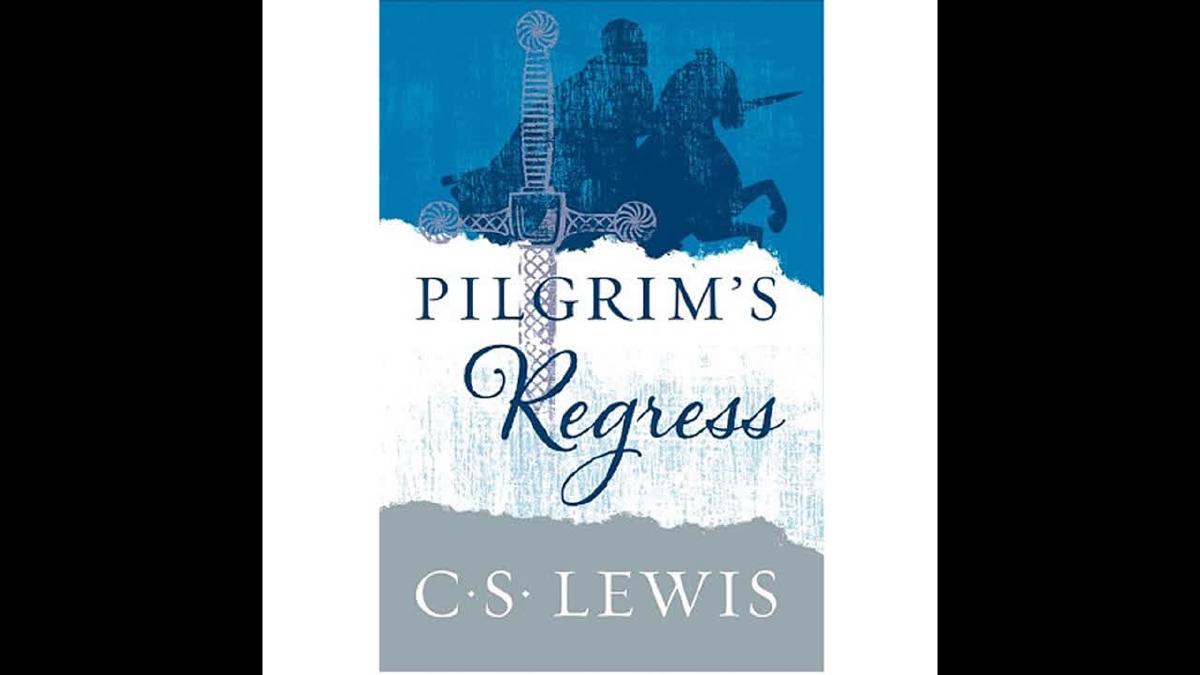
It wasn’t my plan to read this book, but as I read its description in Joseph Loconte’s War for Middle Earth , I decided to put Loconte’s book down and first read Lewis. The decision was made also partly because I still remembered the various captivating things John Piper wrote in the opening chapter of the book The Romantic Rationalist where he quoted a good bit from this book.
Based on what I’ve observed, I’d say that this is the least studied among Lewis’ books, and my guess is that it is partly because this isn’t an easy read, as many people warn. Being an allegory which is itself styled after John Bunyan’s classic Pilgrim’s Progress , at times, I had to do a bit of research to get to the bottom of some of the obscure imagery used by Lewis. Even then, the slow pace that was required to go through it was no stumbling block to me. It was like slowing down and savoring an exotic meal. I learned that this is the first book Lewis published after he became a Christian and that he wrote it in a period of two weeks – which just boggles my mind and leaves me wondering how someone can produce something of this much substance, shelf life and quality in such a short time!
The original subtitle of the book is “An Allegorical Apology for Christianity, Reason, and Romanticism” and it takes the reader through a number of ideologies that Lewis went through before he came to faith. The protagonist, John, glimpses (or was it a vision?) “an Island” while he’s still a young boy living in ‘Puritania’ and it awakes in him a strong desire which eventually sets him off in search for said Island. Along the way, John meets various people and goes different places that either know of the Island but don’t know the way to it, or, on many occasions, he finds people who try to convince him that there’s no such thing as the “Island” – the place where his desire, or “intense longing” will be satisfied. These people (and places) represent the different ideologies that deal with this metaphysical question.
In Bunyan’s Pilgrim’s Progress, Christian, the protagonist, is motivated by fear to escape the City of Destruction, but in this ‘updated’ version by Lewis, “it is the sensation of Joy that compels John to begin his quest. He is captivated by a desire for what might lie ahead – not a sense of dread of what lies behind.” This is, by the way, Loconte’s sentence in War for Middle Earth that pushed me to read this book. This, according to me, and compared to Bunyan’s allegory, is a better premise and it is definitely a question that everyone (without exception) would understand. Not everyone is motivated by “fear” or “eternal judgment” in their pilgrimage, but everyone, as is often said, wants to be happy.
In this allegory, Lewis paints many worldviews such as Freudianism, Materialism, Fascism, Pantheism, Anglo-Catholism, Rationalism, Humanism, Stoicism, etc. All these worldview names are only big words that, should you read the book, are painted in vivid colors and show the different ways they deal with the search for happiness, or, perhaps more correctly, how these paths lead people astray. Much can be said about the story, and every single character could be studied and one could produce extensive articles on each, but I’ll only say something about the geography of the world in The Pilgrim’s Regress because I found this aspect to be profound and insightful.
As John sets out on his journey, moving from East to West, he deviates Northward and Southward. In the South, John goes through a warm region; a place of excess of feeling, sensation, a place where pleasure is deified and the cerebral is gradually absent. This is the region that represents emotionalism, mysticism, and so, in other words, it’s the place of the visceral. The further south you go, the further from reason, the warmer it gets, and the dirtier the place becomes: vermin, worms, etc. The extreme south is a festering swamp: magicians, witch doctors, ghosts are found there.
On the other hand, as he goes up northward, Lewis paints the other extreme side of this world where he encounters people with rigid systems/worldviews that are cold and almost lifeless. These are those who make no place for this “desire” and “island”, people who are too cerebral in their dispositions (hence the freezing coldness of the region). The place is rocky and has no organic life. At the extreme North, he meets “Savage” and his army of dwarfs: people who, due to extreme nihilism, have become sub-human.
As Lewis talks about these extremes (and everything else in between) in the preface of the book, he says this:
“Opposite evils, far from balancing, aggravate each other. ‘The heresies that men leave are hated most’; widespread drunkenness is the father of Prohibition and Prohibition of widespread drunkenness. Nature, outraged by one extreme, avenges herself by flying to the other… We were made to be neither cerebral men nor visceral men, but Men. Not beasts nor angels but Men – things at once rational and animal.”
A key thing to note is that there’s a Grand Canyon; an immense chasm which blocks John’s way to the Island. No one can ever get across to the other side without the help of “Mother Kirk” who represents the church. This canyon represents the fall of man. The problem is, one must accept the help of Mother Kirk and this is a problem because one is naturally inclined not to trust her, let alone ask her for help. Only through conversion does anyone surrender to Mother Kirk. After a series of wonderful events, John finally crosses the Canyon through Mother Kirk and once he gets to the other side, he realizes there’s a sea at the Western most point of this world and that the Island was how the mountains in the eastern side of Puritania (his starting point) looked like. He then must go back (hence the word “Regress” in the title), together with his friend Vertue.
At this juncture, John is a changed man, with new eyes and a new heart. Things don’t look quite the same now that he’s got a fresh vision, which makes for a fascinating read. John encounters the dangers of the south and the north, among other things, only that they are now dragons that must be defeated.
There’s obviously much more to say about the virtues of this book and, personally, I found it to be a work of genius. I’d go out on a limb and (risk to) say that it is, by far, superior to Bunyan’s in the depth of insight. I highly recommend it; and as others have done, I’d advise those willing to read it that it might be better to take enough time to go through the book and try to understand every bit of it.