
This is a book review, click here to find out why I write them, and here to find the list books I've reviewed already.
The “rulers and authorities” really had been dealt their death blow…“Jesus is now Lord of this world, and we must live under his lordship and announce his kingdom.” The revolution had begun.
(391-92)
Introduction#
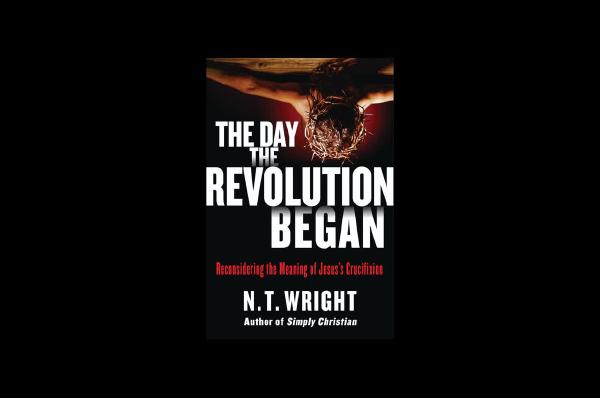
As we come to the end of this (long) series on N.T. Wright’s book The Day the Revolution Began , and in light of all that we’ve seen that the Scriptures teach about the meaning of the cross, what should we learn and then do?
The triumphant Lord sends his church to a glorious “mission”, and reading Wright sketching it out in the book was, to say the least, a very moving and exhilarating experience. This is a mission which is in line with God’s character, and also in line with the power and victory, drastically redefined in the Cross.
Mission & Love#
“If Jesus’s death really did launch a revolution, what does it look like, and how do we join in?” (356). If the goal of Christ’s saving work is for disembodied souls to go to heaven, then the mission becomes only about urging people to believe the message so that their souls go to heaven. The saying “This world is not our home”, if truly embraced in this “platonized” way, will demotivate anyone striving to do anything good in this world, because, “Why plant a tree if the garden is going to be dug up tomorrow” (357)? However, since Wright labored so much to show that this “platonized” goal is pagan at its core, we have, thankfully, a much more intricate mission.
The Christian mission, as Wright notes, means “implementing the victory that Jesus won on the cross” (358). We are to pray, daily, as the Lord instructed, for “His kingdom to come on earth as it is in heaven” and not for us to escape this world to go to heaven. We ought to have (what has been called) the “Puritan hope”: the vision that the kingdoms of the world would become the kingdom of God, as it says in Revelation 11:15 (359). If thinking about how this should be done, Wright warns of two dangers to avoid: triumphalism and despair.
Despair is what characterizes the platonized and escapist wrong goal of disembodied souls going to heaven. This despair preaches a message of forgiveness that “leaves the powers to rule the world unchallenged” (362); rulers that should bow to the Lordship of Christ. This despair is blind to the victory won at the cross and is oblivious of the “revolution” begun on the day our Lord was crucified. The despair sees correctly how dark and deeply the power of sin really lays a hold on this world, but it doesn’t see any hope in the resurrection power, the mighty rescue of God from the “present evil age” and the inauguration of the “world to come”.
On the other hand, we have well intentioned individuals seeking for justice and peace in this world but falling into some sort of triumphalism, forgetting that the victory of the cross will be implemented through the means of the cross (366). As they set out to effect social change, they go with the illusion that it will be an easy task. As Wright notes, there’s the expectation that, since Jesus died, there won’t be, so they suppose, any more dying. But this is far from the message of the New Testament: “The fact that the victory had already been won when Jesus died did not mean that Herod wouldn’t kill James” (368), and it didn’t mean that Paul and Silas wouldn’t be beaten (Acts 16).
The balanced and biblical mission to which the church is called is much more nuanced, and much more in line with the heart of God for the world. It is one that acknowledges that “the revolution that began on the cross only works through the cross” (368). This view takes into account how the cross redefines power, humility and victory. It recognizes that since “suffering was the means of the victory, it is also the means of its implementation” (372). Wright adds:
The revolution he accomplished was the victory of a strange new power, the power of covenant love, a covenant love winning its victory not over suffering, but through suffering. This meant, inevitably, that the victory would have to be implemented in the same way, proceeding by the slow road of love rather than the quick road of sudden conquest. (374)
The Powers and the Power of Love#
Did we, Wright asks, really think it was going to be through “arrogant, self-aggrandizing force of arms”? Perhaps we did; the same way James & John, having been around Jesus for so long, thought it was going to be when they wanted to call down fire from heaven to destroy the Samaritan village that did not welcome them (374). It is therefore not through mere effort that the implementation of the mission should be, but through faith and prayer, with an expectation that suffering and humiliation might not only become what we must endure, but also the tools by which the victory of the cross will be made manifest.
This, in my opinion, is a vision with a healthy dose of biblical realism. It’s a vision that really sends us out to pursue justice, beauty and peace in this world, as well as announcing the victory of the cross in a world that is already occupied and has “authorities” or “powers” over it. It’s a vision telling us that there will certainly be a need to confront the idols of this world, not, of course, armed with arrogance and all sorts of physical weapons, but clothed in the power of love and suffering, hope and faith. We know that Mammon (god of Money), Aphrodite (god of love) and Mars (god of war) are truly worshiped all around the world. (Human) Sacrifices are regularly offered to these idols. However, believing Jesus is also believing in the defeat of these idols, no matter how powerful they seem, and that “it is now possible –despite what many say and most believe – to resist them and find radically different ways of addressing global difficulties” (397). And part of the Christian vocation is “precisely to celebrate Jesus as Lord on the territory where other gods have been worshiped” (398).
This, therefore, might imply, as it were, to speak truth to power and especially to speak up for those with no power at all (400). True Christian hope is not about keeping out of politics nor teaching people how to pray and not meddle in public affairs. True Christian hope doesn’t give us a choice to “retreat into the Christian private space”. We must be prepared to “do what Jesus did with Pontius Pilate: confront them with a different vision of kingdom, truth and power” (401). The forgiveness of sins, as Wright showed on multiple occasions, is one that “breaks the grip of the powers”. If Christians have seen success before in instances like the abolition of slavery trade, Wright says, there will be success again, because the victory of the cross is real, and “the power of the Spirit to implement that victory is real as well” (403)!
This, then, is the revolution that was launched the day Jesus died on the cross. It’s one that calls His church not to retreat so as to go to heaven, but to resist, as it were, the powers that be, knowing full well the inherent difficulties and sufferings and profound depression that might result in doing this. As Wright says, “that is part of taking up the cross” (404). It’s a revolution calling us to holiness and sends us, in faith and prayer, to bring the “reign of Jesus to bear in places where up to now the powers have held sway” (406) and proclaim the Lordship of Christ. It’s a revolution that warns that suffering would not be merely incidental but the means by which that future would be achieved (406).
General Remarks#
As intimated in the introduction, the purpose of this study was not only to get a deeper understanding of the meaning of the cross on the intellectual level, but also so that the same understanding goes deep in my heart and transforms me by the power that it carries. Was that goal achieved? Looking back now, and in conclusion, I’d like to answer that question by offering general remarks about the book:
- There’s much to praise in this book. Wright traces the story of our redemption throughout the entire scriptures and implicitly makes a strong case for the unity of the Bible so that instead of having detached parts that don’t seem to be related, you end up instead with a coherent vision, especially as it pertains to this central doctrine of the Christian faith. I did appreciate Wright’s exposition of the theme of “exile” and how he shows its prominence in the key stories and events in Scripture and how it relates to that of the “forgiveness of sins”. This theme has shown up in a number of his books, notably Jesus and the Victory of God, but I did appreciate him bringing it up especially in this study of the meaning of the cross. I believe it’s a category that illuminates and helps make sense of the story of the Bible. However, I’ve personally not encountered many other authors working with this framework as much as Wright; so if you, dear reader, know of any other author(s) who wrote about it, whether positively or negatively, you may point me in the direction of resources that might help me think well about this.
- Wright puts the first Passover and the events of the Exodus front and center; as the main interpretative grid of the cross. The very few books I’ve read about this topic in the past all organize their study around existing theories (or models) of the Atonement. That no doubt has its benefit, but listening to Wright argue, using scripture, for the primary place of Exodus for our interpretation of the cross was truly wonderful (even as he shows the way to integrate this in a balanced way with the other model that’s often and normally emphasized over the others: Penal Substitutionary Atonement). After all, and according to Wright, Jesus himself emphasized this very “model” and therefore we should pay close attention – without of course discarding these other models. Wright shows how the cross was a kind of power showdown between Jesus and the idols and, even if it seems counter intuitive and upside down, his death marks the ultimate defeat of the dark powers of evil and it is precisely what brings humans freedom from their slavery. The walk through the stories of the gospel was certainly eye-opening and it showed how evil was gathering itself to its full height and how Jesus defeated it in His death. This surely broadens the utility of the four Gospels (long ignored when it comes to the Atonement) and brings them back, I’d say, to the center of our investigations on the meaning of Jesus’s death. If understood well, the theme of the “kingdom of God” which is so ubiquitous in the gospels can therefore be understood as what the cross establishes – and therefore continues even beyond the four gospels; without necessarily using the same terms.
- In this book, Wright seeks to demolish the “works contract” view and he certainly lands many good arguments against it throughout the book. However, I’d confess that reading his dense chapters on the book of Romans left a bitter taste in my mouth. As I read and re-read especially the first four chapters of Romans, I failed to interpret them the way he suggests. To be fair, since this wasn’t a commentary on the letter, much was left unsaid. Be that as it may, I think the “traditional” reading of chapters 1-4 is correct in many ways even though Wright insists on interpreting some verses differently. Discussions on Romans can get quite dense and I can’t really present my disagreements of a reading he spent close to a hundred pages developing. That said, Wright constantly requests his readers to abandon old readings and old concepts (like imputation, and perhaps, propitiation) so often that one gets weary. Perhaps the old interpretations have good grounding in Scripture and we can’t just throw them aside. If the “works contract” perspective keeps emphasizing our moral failure (as opposed to Wright’s “vocational” failure), perhaps there’s a good reason for it, and perhaps there are big chunks of scripture to back that perspective. Therefore, when it comes to Romans at least, a separate work fully focused on its particular context and background would be more helpful to me; especially if I’m to re-interpret it.
- Lastly, the last two chapters reviewed in this article were for me, if you couldn’t tell from the summary, deeply moving. There was much that he says in this regard in his previous book Surprised by Hope, but it would be fascinating, wouldn’t it, to have a work purely focused on eschatology. The Bible has much to say about end times, and consequently the goal of redemptive history, and that’s (probably) why there are so many views and various interpretations; some of which would no doubt disagree with what Wright says here (and said elsewhere). Personally, I agree with Wright, at least as far as this book is concerned, but I’d love to see him getting his hands dirty and address many controversial topics in the many existing Christian perspectives of the end times; notably where he’d place the millennium in God’s future plan for this world.
Not many people would painstakingly read through these notes, but if you, by any chance, have, I’d like to thank you for this, and would love to hear from you if you’re interested. Once again, thank you and I wish you a happy Resurrection day.