
This is a book review, click here to find out why I write them, and here to find the list books I've reviewed already.
“For I delivered to you as of first importance what I also received: that Christ died for our sins in accordance with the Scriptures.”
1 Corinthians 15:3
Key Texts: Isaiah 40-55; Daniel 2,7 and 9; Ezekiel 10-11 and 43.
1. Introduction#
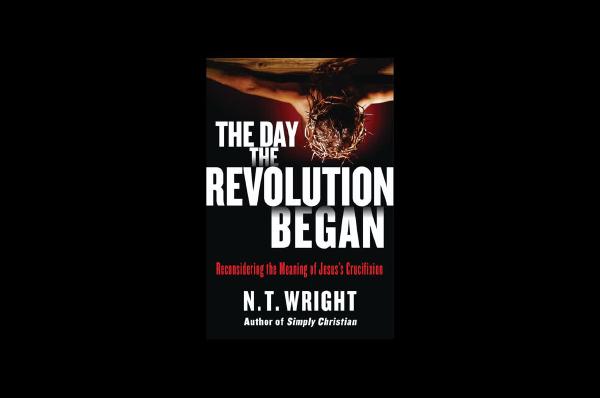
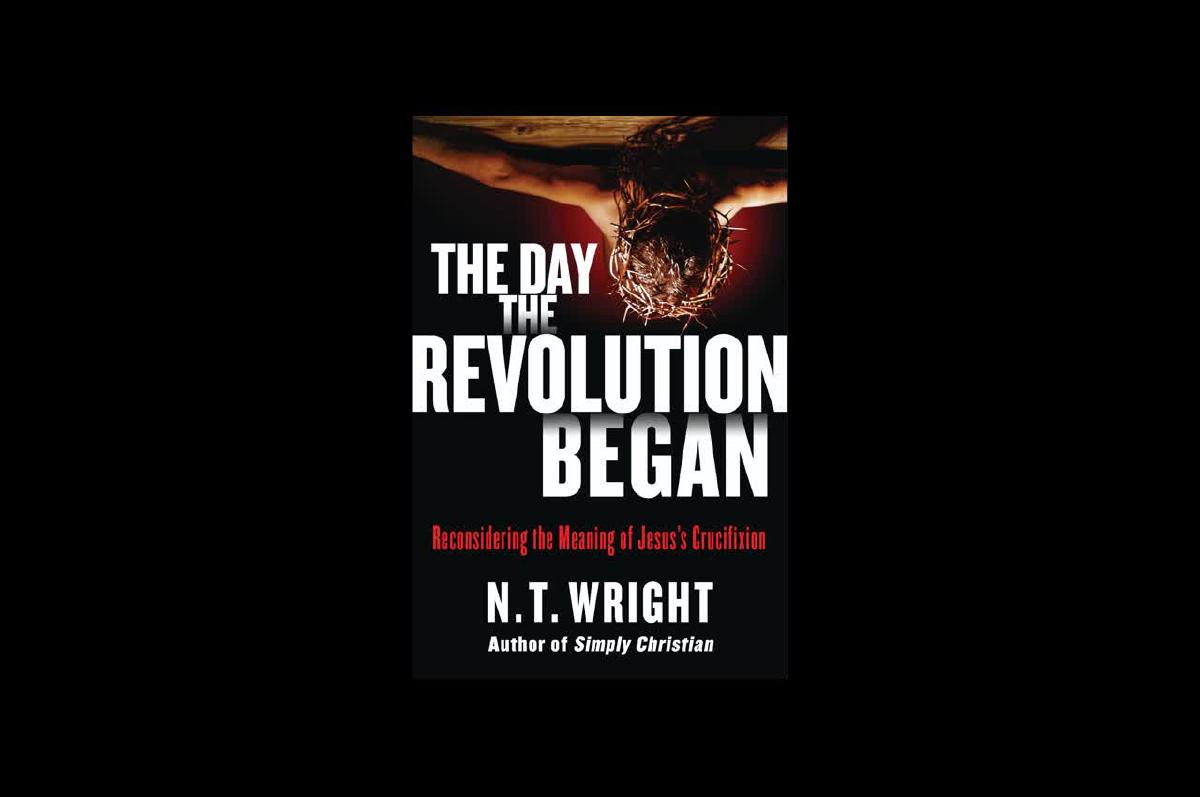
N.T. Wright’s burden throughout this entire section is to understand in what sense the death of Christ was understood to be “in accordance with the Scriptures”. What has the story of Israel as we see it in the Old Testament, “with its twists and turns and dark mysteries, got to do with Jesus’s death and the meaning it had for his first followers?” (93) Can this sense be recovered?
This is where a familiarity of the main stories of the Old Testament are required to go through this second part of the book. I’d recommend re-reading slowly the above mentioned chapters of the Bible not only to get a deep understanding of, what, according to Wright, are the key passages that kept the hope of Israel alive as they awaited their Messiah, but also to be transformed by the glory of God’s love at the center of those passages.
2. In Accordance with the Scriptures#
As one thinks through the stories of Adam, Abraham, Joseph and the Israelites in slavery in Egypt, Moses and the Exodus, David, the Temple and its later destruction as well as the Babylonian captivity; we see “detached images” that don’t seem to supply anything to our understanding of the cross. Can we recover a “thick” sense, Wright asks, as opposed to just a thin and consequently twisted sense, of what it all meant in light of how it all supplies meaning to our Atonement theology?
Wright demonstrates how the idea of “promised land” works as a kind of image of a new Eden: First, the promised land would be the place of life, as opposed to death (Deuteronomy 30). Second, the land would eventually become the place of divine Presence as shown in the tabernacle in the wilderness and later through the temple in Jerusalem. Third, Wright notes that this land was “an advance signpost for something much greater” and that the entire world was to be included (Psalm 2:3, 72, 89).
Wright says that while reading the story of Adam and that of Israel in parallel, we notice that in both cases that we do have a promise of life, but also in both cases, we have the same rejection of God’s call, and still in both cases, the subjects are exiled – Adam out of the garden, and Israel in captivity, away from “the land”. Wright picks up from here to ground his definition of the word “sin” in this story – that’s, of course, if we’re going to talk of “forgiveness of sins”. He insists that “sin” isn’t just moral failure and that it’s not just a failure to keep seemingly arbitrary rules (although it’s also that), but that the word literally means “missing the mark”, which means that when humans “sin”, they fail at a specific vocation – which is, according to Wright, “reflecting God’s wise and loving stewardship into the world”.
Israel was called, not simply to “keep the rules” or “to go to heaven”, but to be “a royal priesthood, to worship God and reflect his rescuing wisdom into the world” (99). For Wright, our fall was not caused by “doing wrong things” (although, in some measure, it’s also that), but ultimately, we missed the target of “worship and stewardship”, and thus “it is a vocational failure as much as what we call a moral failure” (103). The cross, then must be a way to take us back to the intended goal or calling. The cross must then somehow undo the exile that repeats itself from Genesis 3 throughout the entire Old Testament.
Wright asserts:
If, therefore, exile is eventually undone – whatever precisely that will mean – this will be both a “forgiveness of sins” and a new life the other side of death – and the restoration of the life-giving divine Presence (104)
3. Divine Presence and the Forgiveness of Sins#
Wright continues by expounding the theme “divine Presence” brought up previously. He reminds us of the promise God makes in 2 Samuel 7 to David that he’ll build a “house” for him, which in this case is not a building but a family, and that somehow it’ll be through a human being, David’s Son, that the promise will see its ultimate fulfillment. Was God playing tricks or word-games with David? No! Even though Solomon’s temple became, for a brief period, a place God deigned to take residence as a fulfillment to the promise made to David, that glory would depart (according to Ezekiel 10-11) and it will only be a matter of time before the building itself would be destroyed. Ezekiel 43 then tells us, fortunately, that eventually the divine glory was to return; that is after the “death of exile”.
When the temple is rebuilt (marking the Second Temple period of 5th century BC to late first century AD), Wright argues that even the postexilic prophets – Haggai, Zechariah and Malachi – do not suppose that this new temple is as the old, since it is missing the Shekinah glory of Exodus 40, 1 Kings 8, Ezekiel 43, Isaiah 40 and 52. This new temple is still deficient in comparison, but they have a promise that the glory will return even though it hasn’t happened yet.
Wright notes this:
Modern Christians need to be reminded regularly that Jews in this period did not perceive themselves to be living within a story of an angry moralistic God who threatened people that he would send them to hell if they displeased him. Nor were they hoping that, if somehow they could make things alright, they would go to a place called “heaven” and be with God forever. Some ancient pagans thought like that; most ancient Jews did not. (113)
Wright insists that the rescue they were expecting was not from this world but within the present world (113). Only through the rescue, would they be saved from “death” of exile – which is the result of sin. Wright argues that the concept of “forgiveness of sin” has, in the Old Testament, a strong corporate (as opposed to only individual) aspect and that it happens when sins are dealt with and the people, which is in this case more specifically the nation, return from exile. For more, see Lamentation 4:22, Isaiah 40:1-2, Jeremiah 31:31-34 as well as Daniel 9:24.
In addition, Isaiah 52:7 promises that when God returns, He’ll reign but, this time, it will be through suffering and that the people will understand it as an expression of divine covenant love.
4. Covenant of Vocation vs Works Contract#
Before talking about the “suffering” that will be the means through which the promised rescue will come, I need to go back to the first chapter in this section, where I’ve observed many people disagree with Wright. This is where he first talks about our human failure of “vocation” (as opposed to mere “moral” failure) without going much into how this fleshes out in the Scriptures. For Wright, the verse in Revelation 1:5-6 is very important; it states that Christ “loved us, and freed us from our sins by his blood, and made us a kingdom, priests to his God and father”. It’s important to understand, Wright reflects, that the Bible offers a “covenant of vocation” and not a “works contract” (which is that God intended that human creatures keep a moral code if they’re to stay in the garden of Eden).
According to how Wright sees this concept in the popular mind, the “works contract” seems to continue even with the Mosaic law, but since no one was ever able to keep up with this, Jesus comes to “do what the law required” for us and we now have Christ’s moral status as a gift. This, Wright argues, isn’t what the Bible offers. According to him, the primary human failure is a failure of worship. It isn’t just “wrong behavior” that made us fall, although it’s also this; but at the heart of the wrong behavior was a failure to “obey” God’s calling of priesthood and image-bearing. Wright proves his point by highlighting the fact that Paul says in Romans 1:18-25 that the heart of human sin (which eventually brought God’s wrath) is idolatry; which is another way of saying “failure of worship”.
Additionally, he remarks (although without explanation) that there is “dark exchange” that happens when we fail in our calling to be priests; we hand over the power to “dark forces” and we get, as a result, death. In Wright’s perspective, “death” is no longer a “seeming arbitrary and somewhat draconian punishment for miscellaneous moral shortcomings”, but rather, a “direct consequence of the behavior” (86). Which means that the punishment is not arbitrary but an intrinsic result of the dark exchange.
5. Suffering, Redemption#
Now back to the theme of suffering. Wright comes right out of the gate by stating the fact that “we do not find in pre-Christian Jewish literature any suggestion of a coming Messiah who would die for the sins of the nation or the world” (121). Outside Isaiah 53, there was no major passage or understanding that taught that suffering would be the means by which the divine rescue would come. Granted, there was the idea of “messianic woes” that taught of a great suffering but which would be only the “prelude of the coming deliverance”. According to Wright, the Messiah was thought by many to be coming to win military victories. As far as he could tell, only Isaiah 53 presents the intense suffering as the means, and not simply the context, of the expected deliverance (125). Even other “suffering texts” like Psalm 22 change their initial “suffering” tone into triumph; only Isaiah 53 preserves the suffering as the means by which the deliverance would come.
Wright goes through some key extra-biblical material to try and trace Jewish thoughts about suffering just before Jesus comes on the scene. He brings up “pagan stories” of 160 BC recorded in 2 Maccabees and shows that they contain ideas about suffering, and more precisely suffering for others through the lives of Maccabean martyrs in their successful revolt against Antiochus Epiphanes. The martyr’s “sacrifice” somehow “brought to an end the sufferings of the people as a whole, which had been caused by their sins” (128). Wright follows the redemptive significance that was given to the suffering and death of Maccabean martyrs all the way to 4 Maccabees to show that you can see signs that
"…some people at least, under pressure of intense suffering and persecution, reached for ways of interpreting that experience not only as something through which God’s people might pass to deliverance, but as something because of which that deliverance would come about." (131)
Could that have influenced the early Christians’ interpretations of their own savior’s suffering? Wright leaves the question open and finds it sufficient to only note that this thinking would have been available for the Jews of the Second Temple period (and those of Jesus’s day).
6. Final Remarks#
My appreciation for this book really deepened in this section because I deemed it to be truly dipped deep in the Old Testament. This increased my appreciation of the little phrase “according to the Scriptures” that I would otherwise recite in the Nicene creed without much thought. Before I committed to a slow reading of this book, I read reviews that criticized some of the material found in this section, especially the way Wright contrasts the “Covenant of Works” (or works contract) with his own “Covenant of Vocation”. The reproach was that his view of the “works contract” is really a caricature and so it didn’t get a fair treatment. Some who’re willing to read Wright sympathetically suggest that the book would have been better if only he took a “both and” rather than an “either or” approach and not discard the “works contract” altogether.
I’d say that I appreciate these warnings but I also appreciate Wright’s perspective and his efforts to explain this because the same caricatures he’s so against – if they are caricatures at all– are the same things that we hear from pulpits this side of the world. Even though critics point that there’s nothing wrong with holding the two “covenants” simultaneously, I’d appreciate if someone pointed out which framework should be emphasized over the other: that is, which, according to the Bible, should be at the root of our understanding? Or are they supposed to hold the same weight? And this is where, as a layman, I’d ask for someone to help me if they know of a book that can guide me through a fair and accurate treatment of the “covenant of works” understanding of the Old Testament that could rival Wright’s rich and colorful images he used to tie together the Pentateuch, Psalms and the Prophets in a way that makes sense.
A key theme which, I figure, will be important in the next sections of the book is his treatment of “forgiveness of sins”. His way of linking it closely with the theme of exile so prevalent in the Old Testament, from Eden all the way through the Second Temple period, was, to say the least, wonderful. When it comes to connecting seemingly unrelated dots, Wright shines. He’s the “big-picture” guy. My only reservation was that I’m not fully convinced that the average first century Jew would have had a “corporate” sense understanding of “forgiveness of sins” whenever it was mentioned. Wright makes a strong case to be sure, without totally setting the personal sense on the side; but I wonder if Jews had what Wright has in mind when, for example, John the Baptist first came on the scene to preach a baptism of repentance. I guess I’d have to re-read for myself some texts in the New Testament, but I also guess that Wright plans to make it even more plain in the next sections as he especially deals with the Gospels and Acts.
My last remark is about Wright’s talk of the Maccabean revolt and the apocryphal literature that arose especially as it regards to their interpretations of suffering and redemption. Wright himself is not sure (or at least he doesn’t make it clear) if this intertestamental understanding of suffering was itself as a result of reading Isaiah 53 or if it imitates non-Jewish/pagan thought. If Wright wishes to include more historical material for our knowledge so that we get more first century context, then this is of course appreciated, however, let there be no insinuation (however oblique) that somehow the first Christians could have been influenced by these apocryphal writings. I hope he makes this point clear in the coming sections.
Overall, I’m glad with the progress made in the book and I’m eager to take on the next parts.