
This is a book review, click here to find out why I write them, and here to find the list books I've reviewed already.
…Something had happened that afternoon that had changed the world. That by six o’clock on that dark Friday evening the world was a different place. (26)
1. Preface#
Andy Naselli lectured on different “layers” of reading in this Disputatio address titled “How to Read at Different Levels”. Not every book, as he explained, requires the same level of reading, as some, partly because of the way they present themselves, require the reader to make use of “micro-reading”, which is the kind where one slows down, and applies the most serious, “careful, diligent and detailed way to read” as one tries to rigorously trace the argument of the author.
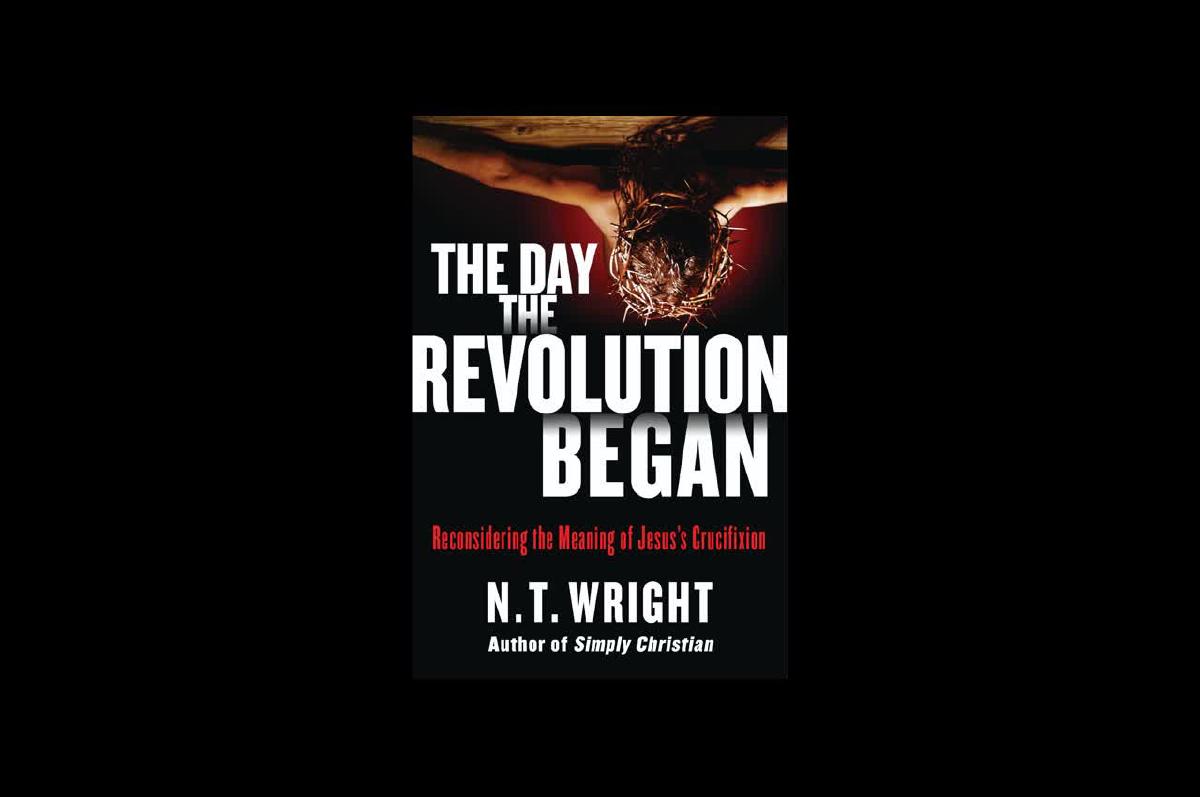
I decided to apply this type of reading to this book and go beyond just tracing N.T. Wright’s thoughts to even dialogue and interact with his arguments. Therefore, as I embark onto a multi-part review journey of the book, I want to mention few reasons why I deemed it necessary (at least for myself):
- The subject itself is worth the effort: it’s so high and so deep. It’s a bottomless ocean and no one will ever claim to have taken it all in. Paul says that it “surpasses knowledge” (Ephesians 3:19). I thought I’d start a tradition where I pick a serious book on the “atonement” right around the time when Lent starts and work my way through it until Easter. And why would I do that? Well, as Wright puts it eloquently,
The point of trying to understand the cross better is not so that we can congratulate ourselves for having solved an intellectual crossword puzzle, but so that God’s power and wisdom may work in us, through us, and out into the world that still regards Jesus’s crucifixion as weakness and folly. (22)
- Laying my cards on the table; I do love N.T. Wright. To date, I still rank his “Jesus and The Victory of God” as well as “Surprised by Hope” as some of the best theology books I’ve ever read. Obviously, not everyone likes him the way I do, and I know he’s had a lot of pushback on much he had to say about “What Saint Paul really said.” A while back, I remember myself being annoyed at something he said (although I don’t remember what) in his “Surprised by Scripture” that I had to put it down never to pick it up again. In any case, regardless of what one feels about him, I’ve found him to be an extremely gifted writer and a good theologian, and so I thought I should engage deeply with this work with pen in hand and an open Bible, and see if I can learn from him.
- I’m also, as the subtitle suggests, a layman, that is, I’ve not gone through some kind of formal theological training. I intend, at least as far as I can tell, to remain a layman for the foreseeable future. As I researched for a book to work with, I looked for one that is not too “academic” in that it shouldn’t lose me through its technical jargon or throw me in a maze of references of what previous scholars have said about the subject. On the other hand, I needed a book that doesn’t dumb things down too much, but one that especially targets readers who have a kind of familiarity with the subject but who would nevertheless be willing to put in the work to take their level of understanding up a notch.
I believe theology, unlike any other discipline, is not to be left to “theologians”, because why would detailed and elaborate discussions about articles of our faith remain only with specialists? I agree with R.C. Sproul, “Everyone’s a Theologian” . I say this to be upfront about my limits in the discipline and hope to make it known if and when I struggle with a particular topic.
With that said, let’s dive right in.
2. Why the Cross?#
He was on the verge of obeying, and getting the whole silly business over, when the defencelessness of the figure deterred him. The feeling was a very illogical one. Not because its hands were nailed and helpless, but because…the thing, for all its realism, was inanimate and could not in any way hit back… It was a picture of what happened when the Straight met the Crooked, a picture of what the Crooked did to the Straight – what it would do to him if he remained straight. It was, in a more emphatic sense than he had yet understood, a “cross”.
C.S. Lewis, That Hideous Strength (333)
Pulling (long) quotes from other books as one dives in the review of another book might seem a rather strange thing to do. However, I couldn’t help but think about this passage as I read through Wright’s opening chapter. In Lewis’ work, we’ve got a man who, even though having no particular “spirituality” to speak of, couldn’t trample on the cross when he was required to. Something “powerful” prevented him from doing so. Wright brings up many such stories of people from various backgrounds who have found themselves recognizing a peculiar power about the cross, without the ability to explain it. Why are we so fond of centuries old hymns about a bloody and rugged cross? What’s in them and why are they so “powerful” and why can’t we ever bring ourselves to exchange them for new ones? Consider “Christian” in Pilgrim’s progress and what he experienced when his burden “loosed from off his shoulders” precisely at the moment he came down at the cross… Why would a grown man like St. Paul be bold enough to say that his entire life is lived “by faith in the Son of God who loved me and gave himself for me” (Gal 2:20)? All this leaves one wondering why the story of the cross carries that much power.
“What kind of sense does it make to suppose that the death of one man nearly two thousand years ago, in an obscure Roman province, could have that kind of power?” (12) Wright argues that we need not know “why” before the cross can have this power and effect on us, but still, the question needs to be asked because “we observe the reality”.
I must say, before moving on, that asking this question, as already mentioned, is not trying to “intellectualize” the spiritual (which some suppose is definitely not the way to tap into that power). It’s not wrong to ask questions and there’s nothing wrong with trying to understand. As Wright writes:
The aim, as in all theological and biblical exploration, is not to replace love with knowledge. Rather, it is to keep love focused upon its true object. (24)
It isn’t only faith that seeks understanding. Love ought to do the same; not of course in order to stop loving, but so that love may grow, mature and bear fruit. (24)
3. 2000 Years of Interpretation#
If the question is not new, then we are “only the latest in a long line of people who have wrestled with the meaning of the cross down through the years”. What has the church said about this event? What does church history teach us about the “theology of the cross”?
According to Wright, the early church is one that never toned down the message of the cross. Paul himself knew not to boast in anything except in the Cross (Gal 2). Wright shows that the first Christians could have chosen to emphasize the resurrection triumph and brush over, or indeed avoid talking about the shameful cross altogether; but, thankfully they didn’t. The Gospel was often summarized as the “message of the cross”. However, in his short sketch of the church history, Wright says that much of the first centuries of Christianity was focused on sharpening the edges of the church’s doctrine of the Trinity (especially as they wrestled through questions about the divinity of Christ), which beyond any other doctrine, was under attack. He acknowledges that during this period, there are only brief mentions of what’s now known as Christus Victor and penal substitution models (notably through Athanasius in the 4th century) as well as appeals to the sacrificial imagery but nothing of a sharpened exploration compared to that of the Trinity.
Detailed developments, according to Wright, come only later, after the split between Eastern Orthodox and Roman Catholic, in the 11th century with Anselm of Canterbury who first articulated what’s now called the “satisfaction” theory: “God’s honor has been impugned by human sin and must be satisfied.” I appreciate Wright’s (apparent) apology for Anselm by cautioning that Anselm’s satisfaction theory must be taken in the context of the high middle ages that Anselm inhabited to be properly grasped. Wright also mentions Abelard, who developed the “moral example” theory as an alternative to Anselm’s satisfaction theory: The cross shows how much God loves us and thereby gives us strong reason to love him and one another in return. Wright is careful to state that Abelard wanted to retain “satisfaction” as well but that it’s only his later followers that made the differentiation between these two models more rigid.
Wright spends most of his time in this section talking about the 16th and 17th centuries of the Protestant Reformation and how this period was a turning point in the history of the church in general and in the history of atonement theology in particular. Wright thinks John Calvin and Martin Luther came hard against the Catholic doctrines (or heresies) of Purgatory and the Mass, and rightly so, but that we need to keep in mind that they were answering medieval questions and not necessarily our questions. It’s in this setting that what we now know as penal substitution (Jesus bearing punishment in the place of his people) as an atonement theory becomes (inevitably) overblown as an answer against the Catholic church’s heretical teachings. Because Jesus’ sacrifice was a “once and for all” event according to the scriptures, Christ’s atoning work had made redundant the practice of Mass (the priest at the altar sacrificing Jesus over and over again) and so this false doctrine was to be vilified. According to the reformers, no further purification or further punishment (as taught in the doctrine of Purgatory) had biblical support because the bodily death itself of Christ is the only thing that can pay for our debts.
Penal substitution became such a hallmark of Reformation theology and it came to color much of the century’s atonement theology. However, as Wright echoes Swiss theologian Karl Barth, he mentions that the “Reformers never sorted out what to say about the ultimate future” and in their preoccupation with our standing before God (in response to medieval questions and abuses) they “failed to challenge the larger heaven-and-hell framework itself”. Wright says this:
If, of course, you are faced with the medieval questions, it is better to give them biblical answers than nonbiblical ones. But the biblical texts themselves might suggest that there were better questions to be asking, which are actually screened out by concentrating on the wrong ones.
Wright acknowledges that not everyone was wrong about this, as the later 17th and 18th centuries Christians held onto a robust resurrection hope that formed part of the “Postmillennial Puritan hope”. Their movement was unfortunately only short lived, as the Enlightenment and Epicureanism of the 19th century which insist on a great gulf between heaven and earth muddied the waters. It all somehow reinforced a caricature (and indeed as Wright keeps pointing out) of a wrong story of salvation: that the story of the cross is that of going to heaven when we die, which leaves us wondering what to do with Easter, the resurrection and the unaddressed ultimate future of the world as God plans it.
Much of these distortions and caricatures, Wright argues, created an unbiblical message outlined as below – and who wouldn’t recognize this, or at least toned down versions of this in our current time?
- All humans sinned, causing God to be angry and to want to kill them, to burn them forever in “hell”.
- Jesus somehow got in the way and took the punishment instead (it helped, it seems, that He was innocent – oh, and that He was God’s own son too.
- We are in the clear after all, heading for “heaven” instead (provided, of course, we believe it).
3.1. Appreciation & Remarks#
Wright’s short survey of nearly two thousand years of atonement theology was fascinating, to the point of wishing he’d have gone deeper to make this a full length book on its own. In this, the great importance of history is shown, in that we need to keep contextualizing formulations of ideas (and theologies) by keeping the struggles and questions of a particular era in the forefront, thus saving us from blindly and uncritically adopting views without acknowledging where they came from.
Even though history is important, a biblical text, as Wright said elsewhere, must be wrestled with and looked at independently from what previous theologians have said about it. It’s always good of course to know what was previously said so as not to err, but I appreciate Wright’s attitude as he dares to question even what Luther and Calvin had said before. Besides, Luther and Calvin themselves challenged long traditions of misinterpretations and one would argue that their legacy, and indeed that of the reformation itself, is one of “always reforming”.
That said, even though I won’t go as far as refusing to give an ear to revisionists (it’s too early to say that about Wright), I should however err on the side of caution before going full on board. This is precisely where my limits as a layman came in to frustrate, because, I should say that I did accept much of what Wright says at face value. I was aware of some of these historical facts, and many of those only vaguely. Which means that without first hand knowledge of the Patristic era literature for example, I can’t know for sure whether or not their articulation of their atonement theory was not as developed and as precise as Wright asserts. Was Wright painting with too broad a brush? I also can’t know for sure that Calvin’s view of the atonement was not as expansive as Wright wishes.
I should think that these great theologians of the past, although still human and still fallible, gained and maintained their status for a good reason, and I’d like to think that they didn’t have such a glaring blind spot concerning a central doctrine. Regardless of the human teachers, I found it hard to believe that Reformed theology in general, while needed at the time, emphasized the wrong thing this whole time. But since I’m not so much acquainted with the primary sources, I’d totally understand if someone was reading this and was not at all happy about it, and I could see how he’d ask that Wright provide more proof if he’s going to make such claims.
In any case, I’m ready and willing to continue to listen to Wright’s take sympathetically, and hopefully much won’t hinge on these historical interpretations.
4. The Cross in Its First-Century Setting#
Wright moves from historical theology to history proper; the history of the first century to be precise. This was sublime. In this last chapter of the first part of the book, Wright intends to clarify what the crucifixion meant in the Greco-Roman context that Jesus inhabited. This is done so as not to simply “pass over” the cross and the brutality and horror that it evoked to the first Christians as we proceed to what we’d really like to do: (mostly) intellectual tearing apart of texts.
The first century minds, both Greek and Roman, were very well accustomed to the great epics like the Iliad as well as, on the Roman side, Virgil’s Aeneid . According to Wright, “it’s no accident that the greatest and best-known poems of pagan antiquity begin with words of ‘wrath’ and ‘arms’” (52) and that the gods themselves shared in the wrath and urged for violence. This is certainly the backdrop against which horrible and brutal practices such as the crucifixion see their rise in the ancient world. We shouldn’t just brush and “pass over” the cruelty of the cross if we hope to ever understand the emotions it evoked. Wright brings ancient testimonies of Cicero, Seneca, Josephus as well as Origen for us to never take the shame of the cross for granted. Perhaps, I thought to myself, Mel Gibson’s The Passion of the Christ film wasn’t exaggerating after all.
Romans, at the peak of their power, made crucifixion their own even though they didn’t invent the practice itself. Spartacus and his six thousand followers were all crucified “along the 130 miles Appian Way from Rome to Capua, making roughly one cross every forty yards.” (57) The crucifixion was a deliberate device to publicly shame those who were punished by the empire: they usually made sure to do that on busy roads or city entrances. Romans, as an example, crucified, according to Josephus, two thousand Jewish rebels sometime between AD 63 and AD 70 to counter the most serious attempt at revolt in Galilee. Jews themselves did not inflict such punishment on their own, except when Alexander Janaeus crucified 800 pharisees in 88 BC (57).
Wright goes through such examples for us to get a sense that Jesus, and by extension Jews of his day, truly lived under “the shadow of the cross”. They knew the horror, terror and shame and they certainly knew what Jesus meant when he told his followers to “pick up their own crosses and follow him”. Wright helpfully demonstrates that the early Christians gave the cross a meaning in a “Roman world” where it already had a meaning: Romans are socially superior, Romans are politically in charge and, theologically and religiously speaking, Roman’s gods are greater. This is not to say that the early Christians gave it the same meaning, but that however deep and rich and revolutionary the meaning they ended up with would be, it was indeed “in the teeth of the meanings the cross already possessed” (60).
So then, what did the Jews think of the cross itself? How did they interpret it to be in “accordance with the Bible”? It’s here that Wright teases out a meaning that is to be explored fully in the next part: Jews never forgot that Christ chose the festival of the Passover as the right moment to go on the cross and that their current “exile”, as Daniel 9 prophesies, will soon come to an end through the decisive deliverance through the Messiah, who ultimately brings about the “forgiveness of sins”.
Wright says that first century Jews didn’t really, as far as he could tell, have categories for a suffering Messiah. But, he helpfully notes that, “nothing in the ancient world, whether Jewish or non-Jewish, prepares us for the sudden flurry of themes and images that tumble over one another as the early Christians tried to express and interpret what had just happened to Jesus” (66).
5. Final Remarks#
Thus far, I appreciate Wright’s decision to make history our starting point for our study. I think there’s some wisdom to it, as it somehow plunges our minds into the context within which Christ lived and preached and eventually died. The question of how, given the facts about what happened, the first Christians probably felt and thought about anything is kept consistently at the forefront and I think this to be very important for us to do, if we hope to recover the meaning of the message they first preached.
Whichever meaning we’re going to derive from this, I hope it also converges with the natural reading of the key texts because it’d be suspicious, and indeed strange, if all of a sudden we started reading texts in ways we would never have if we didn’t have this historical background. This is especially true for sacred scriptures that God himself preserved for both historians and people who’ll never have the chance to know the extra biblical material surrounding the first centuries of Christianity.
In any case, I truly loved this opening, and appreciate, as many people like to point out, Wright’s masterful storytelling.
I’m under no illusion that anyone will find it worth reading my rather long notes on this book, but if you’ve somehow read this far, I’d love to hear from you 1 should this invitation be of any interest. Let me know what you’ve found helpful in my review and where you’d point me by way of helping answer questions I’ve raised. Thank you so much.