
This is a book review, click here to find out why I write them, and here to find the list books I've reviewed already.
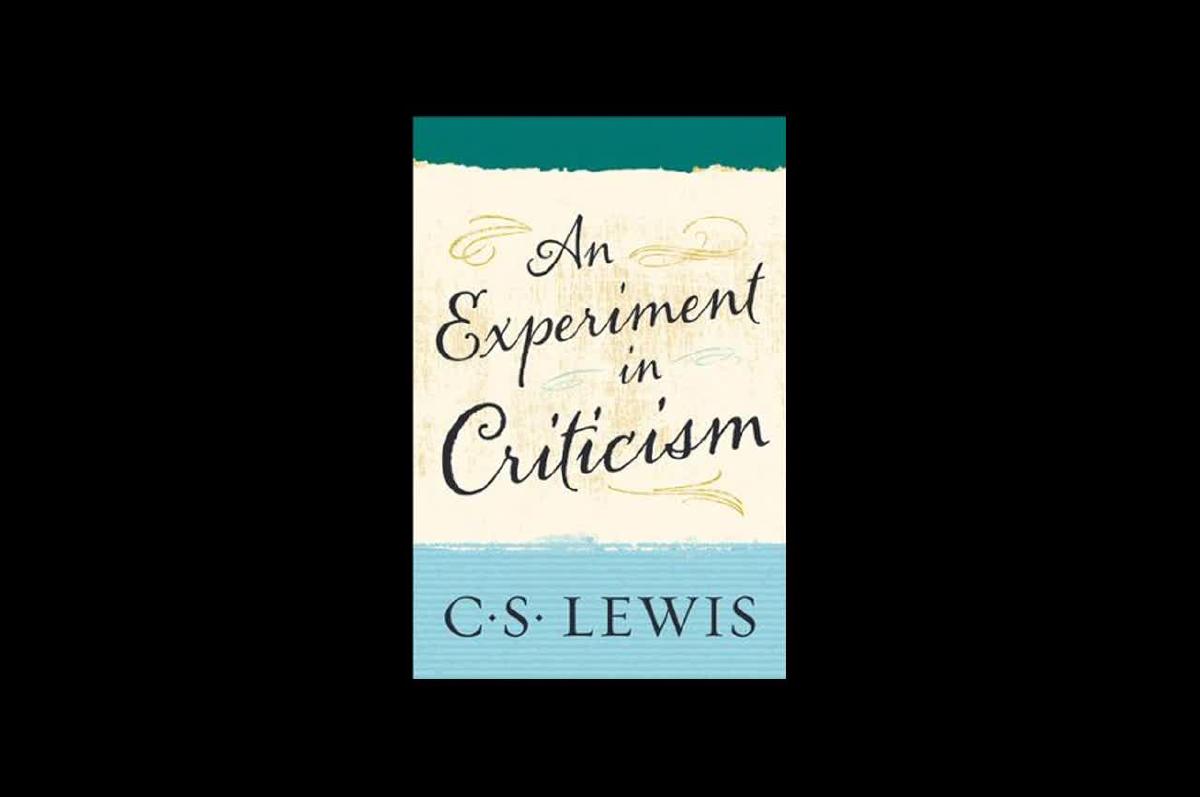
What better way to begin this new section on the website than taking on a book about literary criticism?
As I read this book, I couldn’t help but think that this must be how it felt to sit in a class where the eminent C.S. Lewis was lecturing. I loved every minute of it! Granted, some of the examples he uses come from classical authors I know virtually nothing about (Virgil, Lucretius, Lawrence, Chaucer, Spenser, Mariner, etc.), and so some things inevitably went over my head. But there weren’t many such instances and so I would encourage even those who, like me, are not well read, to pick this work up anyway.
What’s good literature? What makes for a great book? This is the question that this book seeks to answer:
If …we found even one reader to whom the cheap little book with its double columns and the lurid daub on its cover had been a lifelong delight, who had read and reread it, who would notice, and object, if a single word were changed, then, however little we could see in it ourselves and however it was despised by our friends and colleagues, we should not dare to put it beyond the pale. (108)
For C.S. Lewis, how often a work is reread is an index of the quality of a book. If you find that many people regularly reread a particular book, it is safe to assume that there’s something really good in it. A bad book can never compel multiple and passionate re-readings and constant love. If we find a book that everyone reads only to, say, kill time, and thereafter never to be reread, then its quality is significantly lower. What then is it that makes people want to reread books, and why is that an indicator of a good book?
Lewis, on multiple occasions, posits that “observation of how men read is a strong basis for judgment of what they read”. If you try to judge what people read and not how they read, you’ll only end up with a “flimsy” answer that won’t even work over time; that is, you’ll find yourself trying to judge ’tastes’ that change over time. But if you find that a particular work compelled a great number of people to read it – to use his words – attentively, obediently and disinterestedly, then not only do you have a great book in your hands but also, you have a more permanent way to judge works in general. Good books are therefore, according to Lewis, those that “permit, invite, or compel good reading”.
But what exactly is “good reading”?
The first demand any work of any art makes upon us is surrender. Look. Listen. Receive. Get yourself out of the way. (19)
There’s a tendency in all of us to “use” works of arts instead of “receive” from them, thus breaking the first rule of good reading. We see this when we want to impose our own views onto the texts rather than giving a fair listen to what the author is saying. This precisely is the behavior of “the man who talks when he should listen”. Lewis also argues that those who give no regard to fairy tales or myths because they seem “unrealistic” or “childish” or “silly” are the people who are “egoistic”, and “never get beyond themselves”. On many occasions, I have personally felt seen and rebuked when I brought in these mercenary tendencies of putting oneself at the center, and Lewis skillfully lays them out in the open by showing that these tendencies are present just as much in the “unliterary” man as in the expert critic – although not in the same way.
If, on the other hand, a book manages to put you in a good posture, which is that of obedience and reception, then it says much about the book itself. However, the reader, even after multiple nudges from the book itself, can also resist and keep himself “busy doing things with the work that he gives it too little chance to work on him”. Lewis thus acknowledges the role and responsibility of the reader when he insists that said reader should be “obedient”.
This is a great book. In it, one can learn a great deal about myths, imagination, realism, poetry, fantasy, plot mechanics and how good stories/books work in general, in fact he dedicates entire chapters on some of these specific genres and literary tools showing the tendencies of good/bad readers as well as the literary/unliterary. I can only conclude by simply saying how I appreciated every bit of it and that I’d heartily recommend it.