
“Then he said to them, ‘My soul is overwhelmed with sorrow to the point of death. Stay here and keep watch with me.’” (Matthew 26:38)
“And being in agony he prayed more earnestly; and his sweat became like great drops of blood falling down to the ground (Luke 22:44)
“And about the ninth hour Jesus cried out with a loud voice, saying,“Eli, Eli, lema sabachthani?” that is, “My God, my God, why have you forsaken me?” (Matthew 27:46)
How could the one who dwells in unapproachable light, the fountain of all joy, ever be approached, nay, “overwhelmed” by dark clouds of sorrow? And how could the creator of the universe, the one who breathed out stars, ever struggle and labor to the point of agony? The one who is too pure to behold evil was numbered with the transgressors and “made sin for us”1 without ever becoming sinful. How could the beloved Son who, throughout eternity, had always been basking in his Father’s pleasure2 face torments of desolation. That fateful afternoon, He cried in dereliction. The author of life, by mere humans, was killed3. How could it be? How can it be?
“It is the glory of God to conceal a matter”4. Such concealment is not meant as a cat-and-mouse game, a deceptive trick, or a cover for inconsistency. He graciously veils what we, through our inadequacies and insufficiency, are incapable of grasping. It’s no fault of the ocean that no human brain can contain all its secrets. Things, however, were not left completely opaque. This glorious mystery, “though kept secret for long ages”5, was at last disclosed, in Christ. As with a telescope that scans the boundless expanse of space, yet cannot exhaust its immensity, we behold what was once concealed, though it still “surpasses knowledge”6. It is true that the veil was lifted over our faces, but we still see only in part. And though this glorious light has dawned within our hearts7, we cannot behold its full and manifold radiance.
Therefore, human reason gazes, yet cannot take it in whole. “The presence in our theology of unsolved problems is not necessarily a reflection on the truth and adequacy of our thoughts”8, said J.I. Packer. Unresolved tensions do not undermine truth. We see only as in a mirror dimly9, yet the light we catch is real. Though our vision is only partial, what we glimpse is no illusion. It’s true sight. We know truly, though not exhaustively. And what’s revealed is not just any truth, it is the truth, and one by which – or to be precise, by whom – we have eternal life.
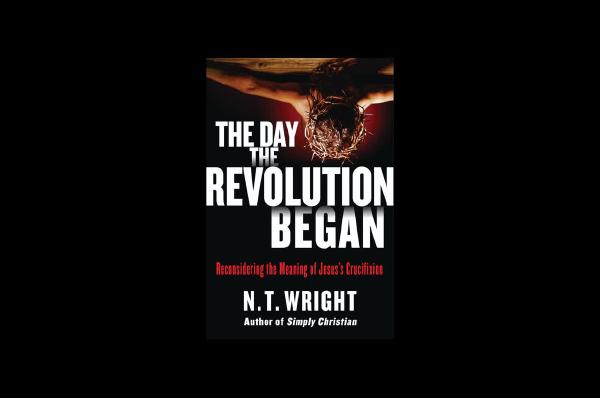
For this season of lent, I studied through a book on the Atonement. You may check my notes below, should this be of any interest and make sure to subscribe by email to get notified when new articles are published.
The Day the Revolution Began Series

The Day the Revolution Began - Part V
Mission, Love & Conclusion
The Day the Revolution Began - Part IV
The Cross According to Paul
The Day the Revolution Began - Part III
The Cross in the Gospels & Acts
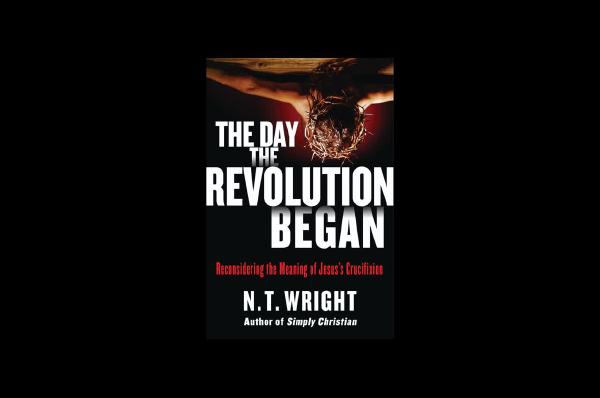
The Day the Revolution Began - Part II
The Stories of Israel
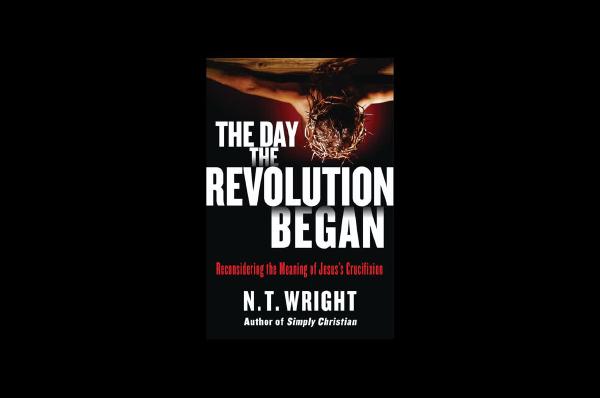
The Day the Revolution Began - Part I
A Layman's Review