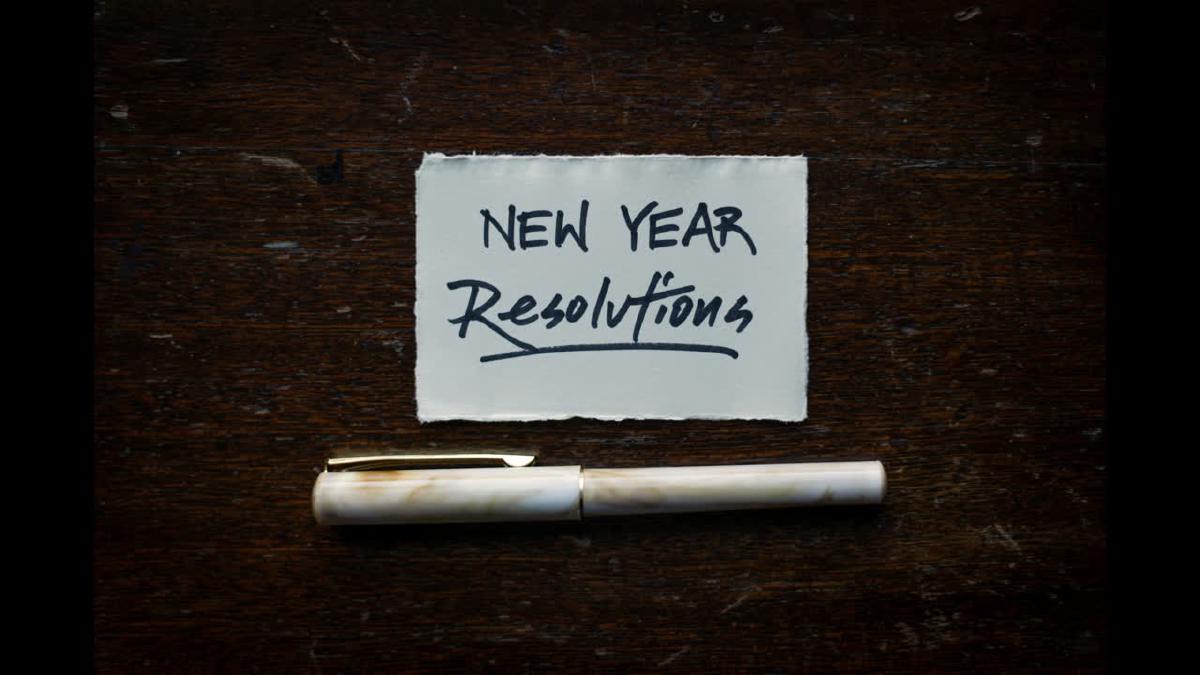

I am not about to pretend to be a productivity guru. Over the years, I’ve made many resolutions of my own and the results are exactly what you’d expect: sometimes they worked, but more often than not, I failed miserably – especially with those set around this time of the year. Still, I’ve learned a great deal from that and I’d like to share 5 things I’ve found useful to keep in mind anytime I’ve resolved to do something.
1. Hold Your Plans Lightly#
Think of yourself as a farmer. Trying to meticulously plan for a good outcome is like scattering good seeds in good soil. There’s only so much you can do to secure a good harvest;alas, much more remains out of your control. Floods, drought, pests, fire, etc. So much can go wrong even after you’ve done everything right. “Man plans, God laughs”, so they say. God decides ultimately. This is His world! What He decrees is what happens! It is His purposes that finally stand! 1
We are bound, sooner or later, to experience frustration. We plan for tomorrow, but we ‘do not know what tomorrow will bring’ 2. We’ll at times hit a snag. Things won’t always pan out the way we designed. Unforeseen events. “Acts of God”. So much can derail us. A single event can drastically change the entire course of our lives! However, if there’s any ’love of God’ in you, this need not be a point of frustration, because eventually, you’ll see how “all things work together for good” (Romans 8:28). Therefore, in all things, hold your plans lightly.
The common suggestion to “pray as you plan” sure sounds tacky for those who don’t usually (or never) pray. To others, though we won’t admit it, it sounds like a magical incantation meant to trick God into getting on board with our plans. In any case, and the way I see it, there’s no other way to get your heart ready to truly say (and mean it): “Thy Kingdom come, Thy will be done!”
2. Failure is Sometimes a Good Thing#
I’ve had my fair share of failure in this regard, just like everybody else. However, looking back now, I don’t feel bad in many cases. Perhaps the resolutions weren’t wise to begin with. Or maybe they were unrealistic, unreasonable, silly or otherwise unnecessary. The resolutions could have been, in and of themselves good, but they perhaps were not a good fit for me.
It’s not a given that I’m always in the right frame of heart or mind when I make resolutions, and so if I end up failing at a bad resolution, I consider that to be a good thing. Therefore (and it should be obvious why) I’m very grateful that I did not succeed at the wrong thing. So, in a sense, thank God for failure!
3. Success is Not Always a Good Thing#
This is closely related to my previous point. For those individuals who are graced with steely resolves, unyielding determination and relentlessness; these all are double-edged swords: that is, they can potentially work against you. Water can float a boat but it can also sink it. Success at the wrong goal seldom comes without a cost.
Therefore, it doesn’t matter that we’ve made good plans and that we have enough will power to get us through, so long as the target is wrong. It doesn’t matter if you’re sailing smoothly if you’re rushing toward uncharted waters where your ship will certainly sink! What would you gain if, in the course of fighting one vice, you end up getting a worse one? What would you gain if in the course of fighting flu, you somehow end up with cancer? “What would it profit a man to gain the whole world and lose his soul?” Would any of it be worth it?
In these cases, your effective planning is paving a straight and smooth ‘highway to hell’, and the insidious thing is that you might never realize what’s happening: In the process of success, no one ever wants to stop and question the success itself. Who would ever want to wake up when their dreams are coming true? In the same way, success, like a huge rolling stone, can be hard to control.
Beware then when you’re succeeding.
4. You Go Only as Far as Your Desire is Intense#
The Scottish reformer John Knox is known for this prayer: “Give me Scotland, Or I Die!” 3. The passion was burning. The zeal consumed him.
Likewise, the success of your resolutions requires this kind of passion that overflows in abundance. How bad you want something ultimately matters. More than the zeal which flickers briefly, you need the kind to carry you over the long haul; otherwise it’ll be like driving a long journey without enough fuel in your tank: it’s a lost cause.
Desires are fed to grow. Consequently, said desires should be fed in proportion to the length of the journey as well as the hardship to be met along the way. Years of alcoholism won’t relent unless a desire with a stronger pull takes hold; namely a desire for something more satisfying and longer lasting than whatever was at the bottom of the bottle.
However, just as I’ve warned in my previous point, even if you were aiming at the right goal, the desire that drives you toward it is not automatically made pure – regardless of its intensity. To come back to our ‘fuel’ analogy, the quantity of fuel you have to move forward matters less than the type and quality of said fuel because the wrong kind totally spoils your engine. What I’m trying to say is that it matters more that you’re animated by virtue instead of greed, justice instead of vengeance, courage instead of pride, hope instead of despair, love and joy instead of envy and jealousy, wisdom and understanding instead of recklessness and sloth.
To put it differently: Yes, the intensity of the desire propelling you forward matters a great deal; but it matters (infinitely) more that you’re moved by the Holy Spirit and not by vile demons!
5. Nothing Ever Happens Without a Plan#
This should be obvious. In fact, up until now I’ve assumed that the sensible thing to do is to plan how you’re going to work on your resolutions. Besides, what are resolutions if not reminders that few good things – if any – happen without deliberate plan and effort? Isn’t that nature’s way to let us know that we just don’t stumble into virtue unless we plan to?
Moreover, if we were always successful in our resolutions, we would have no need for them to begin with. Our frequent failures indicate that there’s always some inherent difficulty. Forming healthy habits rarely (if ever) feels like a gentle stroll down the street; it rather always feels like swimming against the tide.
Showing why nothing good ever comes easily and naturally would be out of scope of this article. This is rather unfortunate because it would have explained how not all things can be planned and worked on with sheer will over time. If your resolution is “to become the most joyful and loving human”, well, I don’t think a mere plan will help you get there. However, for what can be planned, a plan is essential – even though, as I must stress again, it always takes more than a plan.
With that said, I’ll echo the common wisdom that “failure to plan is a plan to fail”. Let’s learn from ants who, having no overseer, make diligent plans for winter (Proverbs 6:6-8). Likewise, if there’s hope to ever get something done, we must make such plans. Certainly, much more can be said about making (and designing) good plans. I’ll only point to the biggest mistake we make by wanting to ’eat an elephant in a single bite’, thus revealing a heart similar to that of a thief who wants everything at once and without delay. Instead, we should imitate the patience of builders who raise even the most imposing structure one brick at a time. We do that by making plans made of specific, detailed steps that are measurable, manageable and subject to periodic review.